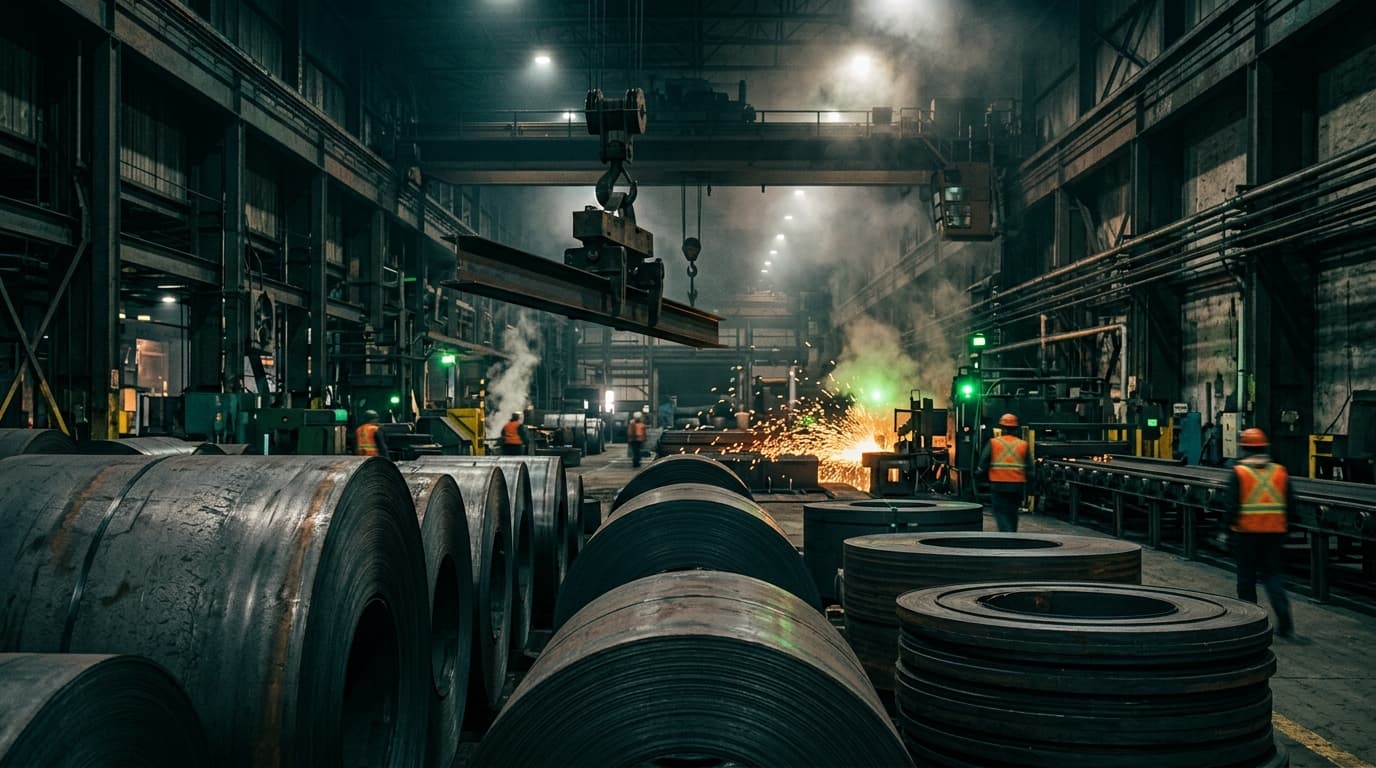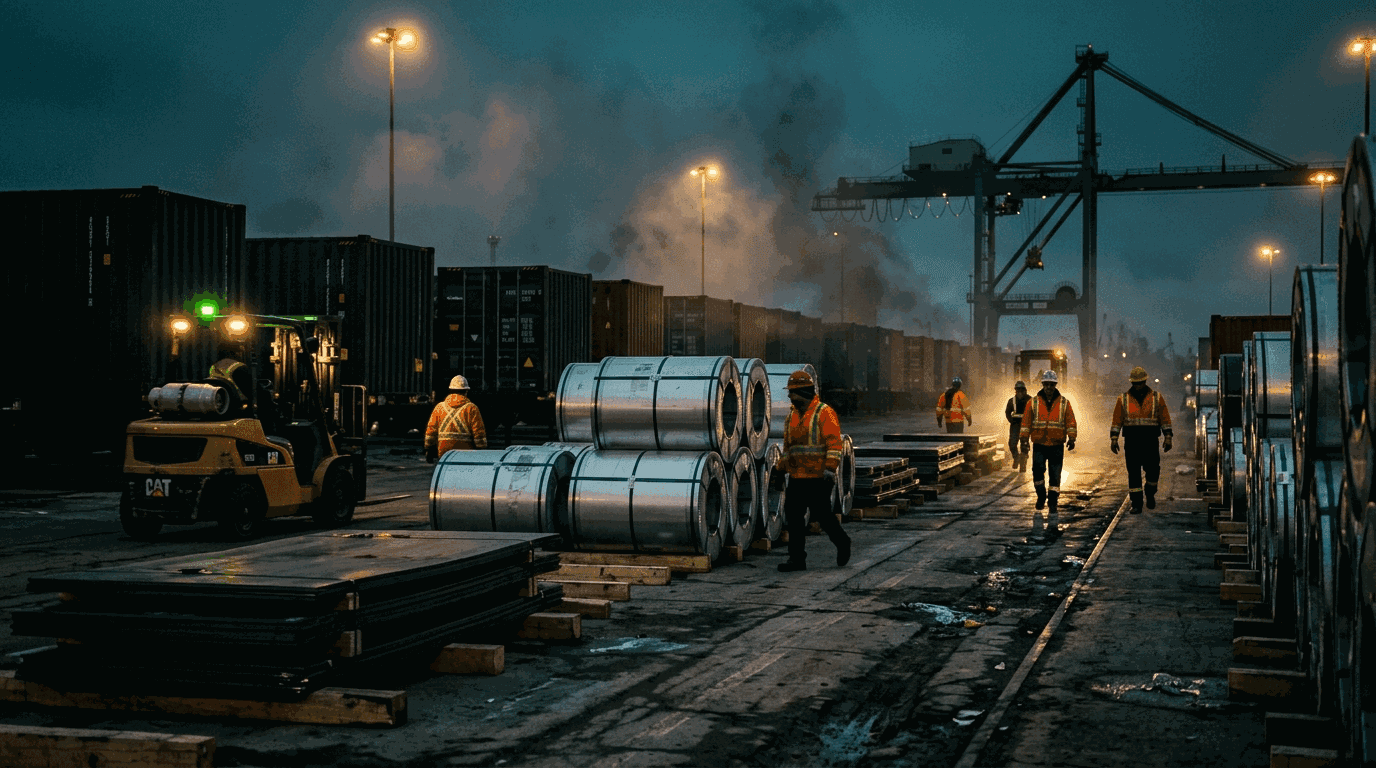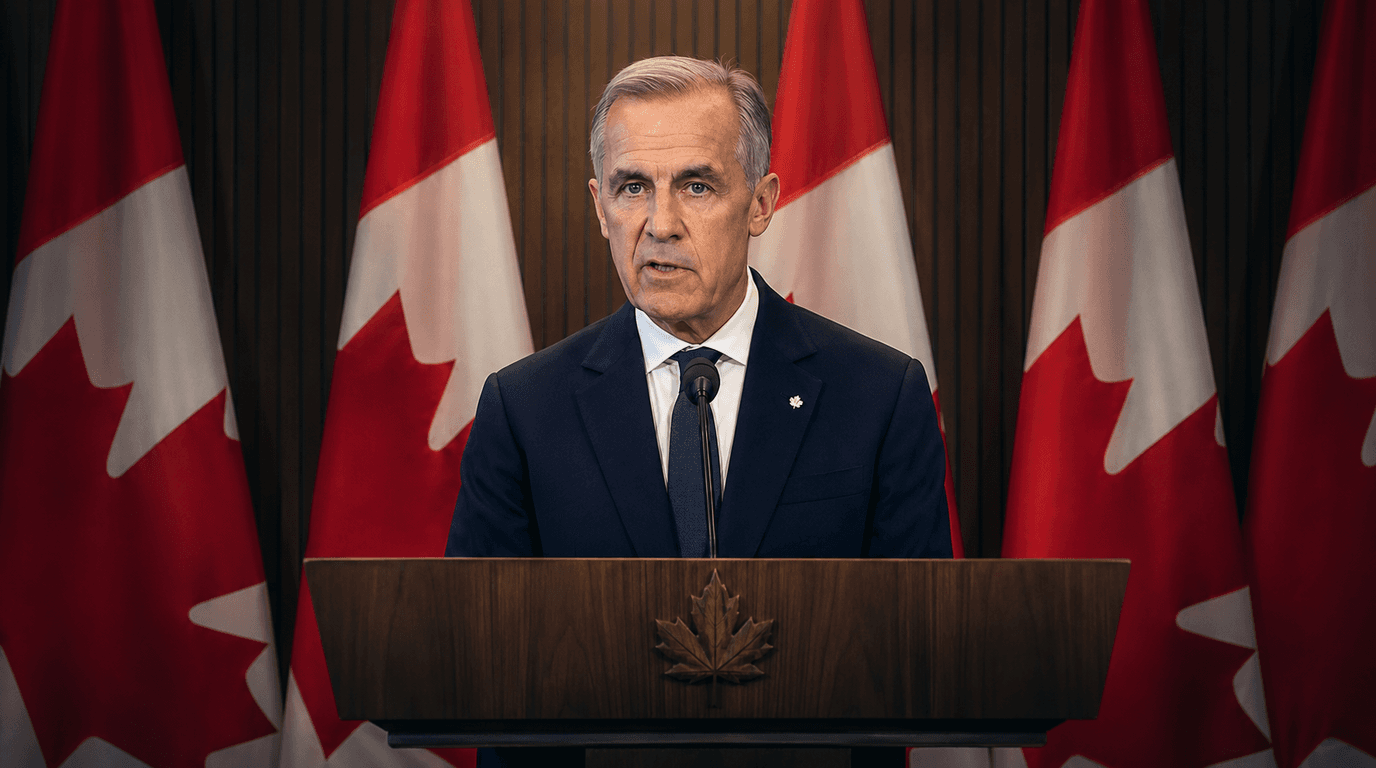
Trade talks between Canada and the United States collapsed this weekend. New US tariffs of 50 per cent landed on roughly $28 billion of Canadian goods early Saturday morning. Prime Minister Mark Carney called Canada’s negotiators home and confirmed Canada will match Washington dollar for dollar, with counter-tariffs taking effect Tuesday, September 8, the Tuesday after Labour Day.
If you manufacture, fabricate, process, or export in this country, the tariff schedule is not the part of Saturday’s announcement that should change what you do on Monday. The support side is. Here is what is already open, what is likely coming, and how fast you need to move.
Update, August 25. The counter-tariff schedule and a further $7.5 billion in support have since been announced. The RTRI non-repayable cap has tripled to $3 million and now covers liquidity, and BDC’s minimum revenue has dropped to $1 million. The figures below were accurate on August 22; read what the $7.5 billion package changed for the current position.
The short version. US tariffs of 50 per cent are in force on roughly $28 billion of Canadian goods. Canada’s matching counter-tariffs bite September 8, on top of the 25 per cent measures already sitting on US steel and aluminum. On the support side, the $1.95 billion Regional Tariff Response Initiative, the $5 billion Strategic Response Fund, the $1 billion BDC metals facility and the Large Enterprise Tariff Loan are all open right now. None of them reimburse you for tariffs you have paid. All of them co-invest in capacity you do not have yet.
What happened this weekend
The United States imposed 50 per cent tariffs across a list Carney described as running “from hockey equipment to clothing, cement, and beer” under Section 338 of the Tariff Act of 1930. The measures had been set for August 19, were paused three days while negotiators tried to close a deal, and took effect when that deal did not come. The exposure is roughly $28 billion of Canadian goods, about five per cent of what Canada ships south each year.
Negotiations broke down over relief on Canada’s strategic sectors. Canada had offered to drop its remaining retaliatory tariffs on steel, aluminum, and autos if the United States lowered its own to levels that made exporting economic again, to encourage provinces to return US alcohol to the shelves, and to take administrative measures on supply management without changing the system itself. Sovereignty, the French language, and Canadian culture were never on the table.
Carney’s language in his remarks Saturday was blunt. “We cannot accept what they have offered, and we will not give what they have asked.” And later: “In short, they asked too much and offered too little.” Canada’s counter-tariffs will be concentrated in steel, dairy, appliances, agricultural equipment, pulp and paper, and electronics, and will also cover products already caught by the US Section 232 and Section 338 measures. The detailed schedule lands in the coming days.
We cannot control the storm blowing in from Washington. We can chart a new course by building Canada strong at home and diversifying our trading relationships abroad.
— Prime Minister Mark Carney, August 22, 2026
For context on how tied together the two economies still are: last year Americans sold almost $600 billion in goods and services to Canadians, more than $1.6 billion every single day. Canada is the largest customer for 26 US states and a top-three customer for 45. A dollar-for-dollar response is not a small policy adjustment. It is a structural change in how Canadian manufacturers will source, sell, and invest for the next several years.
The full address is worth 20 minutes of your time. CBC has it here: FULL SPEECH: Carney explains why Canada suspended trade talks with the US. Global News has the news coverage.
Where the tariff wall actually stands right now
It is worth having the whole picture in one place, because most companies only track the measure that hit them.
What the United States has on Canada
- 50 per cent under Section 338 on roughly $27.6 billion of goods, in force since Saturday, August 22: hockey equipment, clothing, cement, beer and several hundred other lines
- Existing Section 232 measures on steel, aluminum and autos, with no CUSMA exemption
- An April 6, 2026 adjustment that widened the tariffs to cover products merely containing steel, aluminum or copper, which is what pulled thousands of downstream fabricators into scope
What Canada already has on the United States, and what lands September 8
- 25 per cent on a list of US steel imports worth $12.6 billion and aluminum products worth $3 billion, already in force
- New on September 8: dollar-for-dollar counter-tariffs concentrated in steel, dairy, appliances, agricultural equipment, pulp and paper, and electronics, plus products already caught by the Section 232 and 338 measures
- Tariff rate quotas curbing foreign steel, set at 20 per cent of 2024 import levels for non-free-trade-agreement countries and 75 per cent for FTA partners, with a 50 per cent tariff above the threshold
- 25 per cent on certain steel and aluminum from China, including non-US steel melted and poured in China or aluminum smelted and cast in China
- 25 per cent on steel-derivative products such as wind towers, prefabricated buildings, fasteners and wires
Two measures in that list are opportunities rather than costs, and they get missed. The Buy Canadian procurement policy now requires every federal contract over $25 million to prioritize Canadian materials, and there is temporary freight rate relief for steel and lumber. If you make something Ottawa buys, the tariff wall just became a moat.
Two numbers, and they are not the same thing
Saturday produced two figures that are easy to run together, and keeping them apart is what tells you where the money actually is.
$28 billion is the tariff number. “Dollar for dollar” describes the retaliation, not the support. Canada is matching Washington’s new tariffs with counter-tariffs on a comparable value of US goods, concentrated in steel, dairy, appliances, agricultural equipment, pulp and paper, and electronics, in force September 8. That is a cost to price into your landed-cost model, not a program you can apply to.
$25 billion is the support number, and it is not new money. Carney said the government is “matching that spirit with $25 billion to protect Canadian workers and businesses hurt by the American tariffs.” Read alongside Friday evening’s statement, which puts it plainly: “nearly $25 billion in support provided over the past 18 months.” The same statement says the government will introduce additional measures in the coming days.
The practical consequence: there is no $25 billion announcement coming that you need to wait for. That money has been flowing since early 2025 through the programs below, most of which are open and accepting applications today. What is still to come is the counter-tariff schedule, and whatever additional support measures land on top.
Carney described three things the support side is doing, and the wording is worth reading closely because it tells you exactly what kinds of projects get funded.
- “We are helping our small and medium-sized businesses respond by investing in equipment, productivity, and supply chain resilience.”
- “We are providing financing to keep large employers operating and retain their workers.”
- “We are helping our hardest-hit industries retool and pivot to international markets.”
Equipment. Productivity. Supply chains. Retooling. New markets. Not one of those words is about compensating you for a tariff you already paid. Every one of them is about capital expenditure that leaves you with more capacity than you had before.
Carney did not name the delivery channels in his remarks. He did not need to. Those three sentences map, almost word for word, onto four instruments that are already open and already writing cheques. Equipment and productivity for SMEs is the RTRI. Financing to keep large employers operating is BDC and the Large Enterprise Tariff Loan. Retooling and pivoting to international markets is the Strategic Response Fund.
What is already open right now
1. The Regional Tariff Response Initiative ($1.95 billion)
The Regional Tariff Response Initiative (RTRI) launched in March 2025 at $450 million and now stands at $1.95 billion after four separate increases. It is delivered by the seven regional development agencies, which is why parameters vary by region. That regional variation is the single most common thing companies get wrong. The history matters, because each top-up carved out money for a different sector:
- March 2025: launched at $450 million
- September 5, 2025: more than doubled to $1 billion over three years, in the same package that created the Strategic Response Fund
- May 4, 2026: plus $500 million, including $200 million for SMEs hit by the steel, aluminum and copper tariffs. This was the RTRI half of a $1.5 billion announcement; the other half was the separate $1 billion BDC facility below
- June 3, 2026: plus $300 million for forest sector transformation, part of $400 million to the RDAs that also stood up a new $100 million Regional Development Fund
- June 11, 2026: plus $150 million as a Food Security Fund, for domestic food processing, production, storage, distribution and community delivery
- Separately, $150 million of the RTRI is carved out for steel producers specifically. That is distinct from the $200 million SME carve-out above
In southern Ontario, a for-profit business can access non-repayable contributions from $125,000 to $1 million or repayable contributions from $125,000 to $10 million, with eligibility set at five or more full-time equivalents in the region and fewer than 500 overall. Not-for-profits supporting SMEs can access up to $10 million non-repayable. PrairiesCan sets a different bar, and its intake runs to December 31, 2027 or until the money is gone, with all projects completed by March 31, 2028. Comparable intakes are running through ACOA, CED in Quebec, FedNor, PacifiCan, and CanNor. Check your own agency’s parameters before you build the budget. We wrote the full breakdown here.
This is not theoretical. On August 10, PacifiCan put $30.5 million into 24 British Columbia businesses under the RTRI. Mahler Machining in Coquitlam took $1 million to modernize its facility with advanced equipment, automation, and new software. COTA Aviation in Parksville took $1 million for equipment to produce gears for aircraft and defence systems. Quadrogen in Burnaby took $3.6 million. That is what a funded RTRI file looks like.
2. The BDC Steel and Aluminium Industries Support Program ($1 billion)
BDC is deploying a $1 billion envelope in working capital loans from $1 million to $50 million at preferred rates, announced with 36-month repayment terms. Eligibility covers Canadian manufacturers of steel, aluminum, copper, or products made mostly or entirely from those metals, exporting to the United States, with $5 million or more in annual revenue and three or more years of operating history, that were viable before the tariffs hit.
Two details worth knowing. “Material exposure” is broader than it sounds: it covers companies that export products directly subject to tariffs and companies selling goods that merely contain steel, aluminum, or copper components where the finished good is now tariffed. And BDC states explicitly that eligible companies may also use other BDC and government support programs where permitted, so this does not foreclose an RTRI application.
The loan is for operating cash flow: working capital, scheduled debt or lease payments, liquidity to keep running through the disruption. It is not project capital. RTRI funds the project, BDC funds the operations underneath it. Most tariff-exposed metal fabricators should be looking at both.
The metals facility is also not BDC’s only tariff envelope, and the others are far less well known. If you do not fit the steel, aluminum and copper criteria, one of these may still fit you:
- Pivot to Grow: a $500 million envelope of financing and advisory services for tariff-impacted businesses in any sector
- Softwood Lumber Guarantee: a $1.2 billion envelope backing financing and letters of credit for softwood lumber businesses, which helps offset the collateral strain of duty payments. Enhanced in June 2026 with higher maximum loans, plus two new direct-loan programs covering harvesting and pulp and paper
- Defence Platform: a $6 billion envelope for financing, investment, consulting and ecosystem support in defence and security. Pair this with the Regional Defence Investment Initiative if you are moving into the defence supply chain
3. The Strategic Response Fund
The Strategic Response Fund (SRF) is a $5 billion commitment, created in the September 2025 package as the successor to the Strategic Innovation Fund, and it is where the large transformative files go. Ottawa describes it as carrying flexible terms for firms in all sectors hit by tariffs, and within it has earmarked up to $1 billion for steel alone, aimed at expanding domestic capacity, producing steel products Canada does not currently make, and securing steel inputs for priority sectors including defence. Applications are accepted on an ongoing basis. Minimum project sizes here are large, so this is the right tool for a transformative capital program rather than a single machine purchase.
4. The Large Enterprise Tariff Loan facility
When Carney said the government is “providing financing to keep large employers operating and retain their workers,” this is the instrument he was describing. The Large Enterprise Tariff Loan (LETL) facility is managed by the Canada Development Investment Corporation through its subsidiary, the Canada Enterprise Emergency Funding Corporation, and it is aimed squarely at the top of the market. It was expanded in the May 2026 package.
- Who it is for: companies with approximately $150 million or more in annual Canadian revenue, significant Canadian operations or workforce, that were viable before the tariffs and solvent as at December 31, 2024
- Size: there is no minimum loan amount. The facility is sized to cover an applicant’s 24-month liquidity shortfall, after other sources of capital are exhausted
- Pricing and term: interest will never be less than Canada’s 10-year bond rate at the time of the loan plus 25 basis points, and the term can run up to ten years
- Timing: the facility stays open “while the current economic situation persists,” so there is no application deadline to race
The LETL is deliberately a lender of last resort: you have to show you sought financing through traditional market sources first. If you are a large employer whose bank has gone quiet, start the conversation with CEEFC early, because the diligence is heavy and the facility is priced to be less attractive than commercial credit by design.
The point most companies miss
Business owners hear “tariff support” and assume they are applying for a refund. They are not.
These programs pay for expansion. New lines. Automation. Additional shifts. Plant retrofits. Qualifying a second supply chain outside the United States. Standing up a product you were previously importing. Hiring and training the people to run it. The tariff is the trigger that makes you eligible. The project is what gets funded.
Which is why the ceilings are what they are. Up to $1 million non-repayable and up to $10 million repayable through the RDAs, and considerably more than that through the SRF for companies making a serious capability investment. Nobody writes a $10 million cheque to reimburse duties. They write it to build something.
The corollary is that a weak application is usually a weak project, not weak paperwork. If you walk in asking to be made whole, you will lose. If you walk in with a costed, engineered, phased capacity expansion and a credible market for the output, you are in a different conversation entirely.
Critical minerals is a separate track, and it is also moving
The tariff files get the headlines, but the critical minerals build-out is where some of the largest capital is going, and it runs on different machinery.
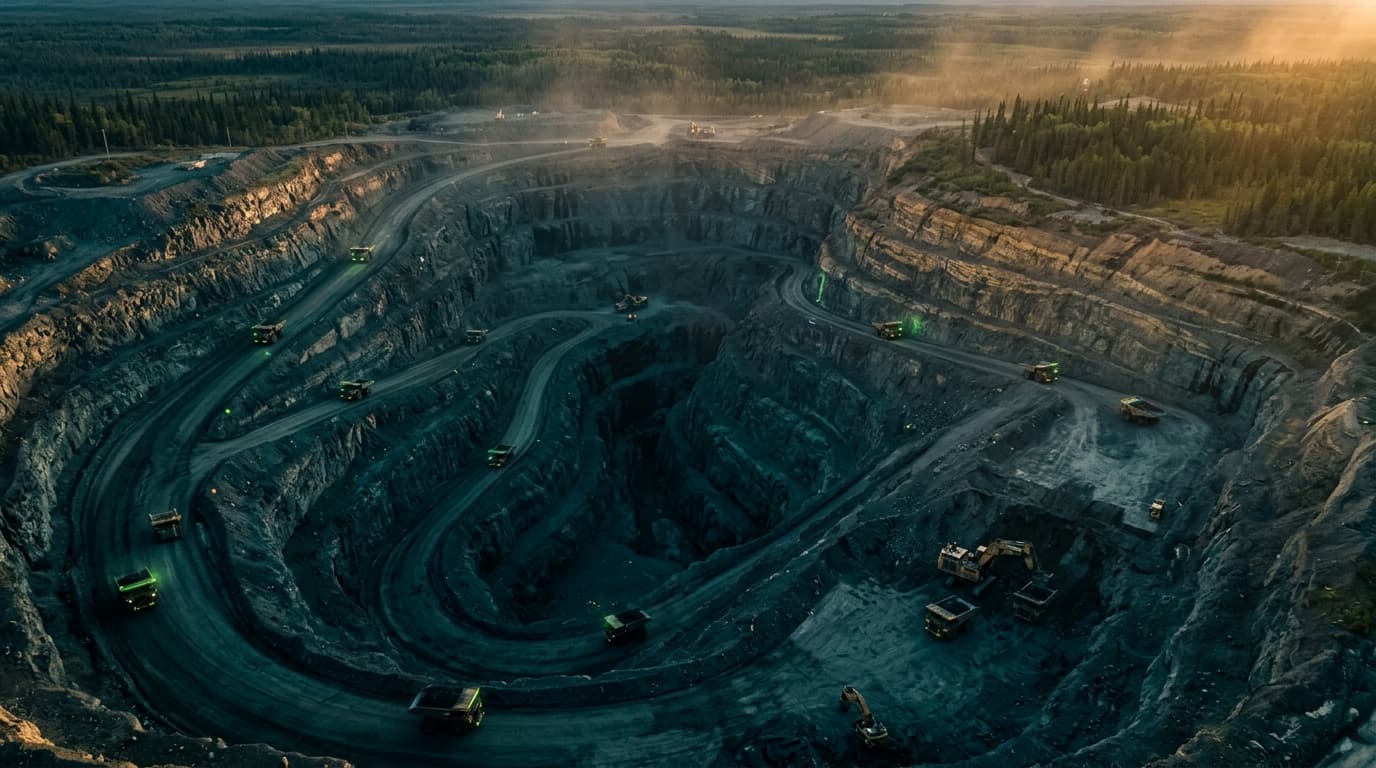
The Canada Critical Minerals Accelerator (CCMA) was announced with a $2 billion envelope and uses equity, loan guarantees, and supply agreements rather than grants, with Export Development Canada and Natural Resources Canada proposing investment packages and a Ministerial Investment Board, co-chaired by the Ministers of Energy and Natural Resources and of Finance, making the final call. The First and Last Mile Fund (FLMF) holds up to $1.5 billion through March 31, 2030 for the roads, power, and access infrastructure that get a deposit to market.
Alongside them sit the RD&D and geoscience programs that fund the technology itself. Recent awards under the Critical Minerals Research, Development and Demonstration program include up to $21.9 million to Mangrove Lithium for spodumene concentrate processing and lithium refining, and $5 million to Exterra to recover nickel, cobalt, and magnesium from asbestos mine tailings.
Neither the CCMA nor the FLMF runs an open call. Government identifies proponents. That makes early positioning and a well-built technical and economic case far more important than watching for a deadline. Our guide to the mining and processing stack is here.
What to expect next
What is confirmed is the tariff side. Ottawa will publish the counter-tariff schedule in the coming days, and companies importing from the United States will need to price it before September 8.
Carney framed all of it inside a much bigger domestic build, and the numbers he cited are the context every funding conversation this fall will happen inside: 27 nation-building initiatives referred to the Major Projects Office representing $500 billion in new private investment; a $51 billion Build Communities Strong Fund with more than 100 projects announced; Build Canada Homes at nearly 17,000 committed units across 17 partnerships; half a trillion dollars into defence; more than 20 trade and security agreements across five continents giving tariff-free access to 1.5 billion consumers, with a stated plan to double that within six months; EU talks opening this fall; and the first Canadian Investment Summit in Toronto in three weeks, aimed at investors managing over $100 trillion. Budget 2026 lands this fall with what Carney promised would go “further to make Canada one of the most competitive and attractive places in the world for businesses and strategic sectors to invest, build, and grow.”
On the support side, our expectation is that the regional envelopes get topped up again, that sector eligibility widens beyond steel, aluminum, and copper, and that the BDC facility is extended. We would also expect a stronger tilt toward capacity that substitutes for US supply and capacity that serves the new trade agreements. That is our analysis rather than announced policy, so treat it as a planning assumption and not a fact. The point is that the direction of travel is not ambiguous, and the government has already said additional measures are coming.
What to do between now and September 8
Applications under these programs are long, and review typically runs three to seven months from submission to decision. Companies that start when the announcement drops are already months behind companies that started when the announcement was hinted at.
- Cost your project now. Quotes, drawings, layouts, a phased schedule, and the labour plan that goes with it.
- Model the tariff impact properly. Volume, margin, landed cost, customer concentration. This is the evidentiary core of the file.
- Decide what you actually want. Non-repayable capital is smaller and more competitive. Repayable capital is larger and often the better instrument for a real expansion.
- Get your financial house in order. Three years of statements, a clean going-concern picture, and a capital stack that shows where the rest of the money comes from.
- Sequence the stack. RTRI, BDC, SRF, the LETL, provincial programs, SR&ED and the Clean Tech ITC, and IRAP are not mutually exclusive, but they have to be layered deliberately against the government-assistance ceiling. BDC states outright that its borrowers may also use other BDC and government programs where permitted.
Tariff-exposed and not sure where you stand? Send us a few details and we will tell you. It takes two minutes, it opens a short form, and we do not charge to look at your situation and tell you whether you have a file worth putting forward.
Building Canada strong
This is the work we do every day. In 2026 alone we have over $300 million under co-investment across 100 separate projects, the majority of them building as part of a Build Canada strategy. We work with more than 150 companies across industries, in every region of the country: manufacturing lines, processing capability, and critical minerals work that runs from the technology through to converting ore into pure mineral, and the extraction plans that feed it.
We are the added support on your team. Not just the funds, but the guidance along the way, and we do the work. Eligibility, project structuring, the application itself, due diligence, claims, and close-out. You keep running the plant.
What we keep seeing is that the companies who win are the ones who treat this as a capacity decision rather than a paperwork exercise, and who get in early, survive due diligence, and then actually execute the project they promised.
Carney closed Saturday with two lines worth borrowing. “In Canada, we are masters in our own home, from coast to coast to coast.” And: “Building Canada strong. For all.”
Build Canada is not a slogan if you are the one building it. There is real money on the table right now, the counter-tariff detail lands within days, and the support side has been widening every few months since this started.
So here is the honest answer to what a tariff-exposed company should do about all of this. Invest now.
Not wait for the next announcement. Not wait for the counter-tariff schedule to settle, or for the exemption that may never come. If your business is affected, this is the window to commit to the line, the equipment, the automation, the second supply chain outside the United States, the processing capacity you have been modelling for two years. Ottawa is not writing cheques to companies standing still. It is co-investing with companies that are building.
That is the whole idea behind these programs, and it is the part that gets missed. The government has money and a mandate. You have the project, the site, the crew, and the customer. Put those together properly and Canada comes in beside you on the capital stack.
If you are tariff-exposed, expanding capacity, or building in critical minerals, talk to our team. We will tell you honestly whether you have a file worth putting forward, and if you do, we will run it end to end. Invest now. Let us help Canada co-invest with you.
Regional Tariff Response Initiative
The $1.95 billion federal initiative delivered by all seven regional development agencies, offering up to $1 million non-repayable or $10 million repayable for tariff-impacted businesses. Parameters vary by region.
Steel and Aluminium Industries Support Program (BDC)
A $1 billion envelope of working capital loans from $1 million to $50 million at preferred rates for steel, aluminum, and copper manufacturers exporting to the United States.
Related reading from Fundspoke
- Ottawa Adds $1.5B for Tariff-Hit Canadian Businesses, the May 2026 package of $1B through BDC plus $500M into the RTRI
- Regional Tariff Response Initiative, up to $10M for tariff-impacted businesses
- Critical Minerals Funding, a complete guide to the CMIF and the Strategic Response Fund
- Regional Defence Investment Initiative, up to $10M for defence supply chain companies
- 2026 Federal Budget, what changes for Canadian growth companies
- IRAP updates, new contribution limits and eligibility changes
- SR&ED in 2026 and what the new Clean Tech ITC means for your claims