Every federal budget reshuffles the deck for Canadian companies chasing growth capital. The 2026 edition is no exception, and for founders and CEOs running capital-intensive projects, there’s more to unpack than the headlines suggest.
We’ve pulled out the changes that actually matter for growth-stage companies: the programs that got bigger, the ones that got replaced, and the subtle shifts in eligibility that most people won’t notice until it’s too late.
What changed in the 2026 federal budget for growth companies?
The big moves centre on three areas: an overhaul of the SR&ED program, the formal launch of the Strategic Response Fund (SRF) as SIF’s replacement, and expanded Clean Technology tax credits. There’s also a quiet but meaningful bump to Regional Development Agency budgets across the board.
If your company spends on R&D, is scaling manufacturing, or operates in cleantech, critical minerals, or defence, keep reading. The dollar amounts have changed, and so have the rules.
SR&ED enhancements: what’s actually different?
The Scientific Research and Experimental Development program is still the single largest source of R&D support in Canada, roughly $4 billion annually. But the 2026 budget made three changes that shift the math for growing companies.
- Expenditure limit increase: The annual expenditure limit for the enhanced 35% refundable credit rose from $3 million to $6 million. For a CCPC doing legitimate R&D, that’s up to $2.1 million back in cash. Not a tax deduction, actual cash.
- Taxable capital phase-out raised: The range at which the enhanced rate phases out moved from $10–$50 million to $15–$75 million in taxable capital. That’s a massive expansion. Companies that previously lost their enhanced rate now qualify again.
- Proxy rate adjustment: The prescribed proxy amount for overhead, used by most claimants, ticked up slightly, reflecting actual cost-of-doing-R&D in 2026. Small change, real dollars.
The taxable capital threshold change is the one most companies will miss. If your company lost access to the enhanced 35% rate in the last few years because you exceeded the old $10–$50M taxable capital range, check your 2026 eligibility under the new $15–$75M range. You may be back in.
The Strategic Response Fund replaces SIF
The Strategic Response Fund isn’t a rebrand. It’s a $5 billion restructuring of how Canada supports large-scale industrial projects. SIF stopped accepting new applications in September 2025, and SRF formally launched in the 2026 budget with a broader mandate.
Here’s what’s different. SIF was focused on R&D and commercialization at scale. SRF keeps that mandate but adds explicit streams for trade-disrupted industries, critical minerals processing, AI infrastructure, and defence-adjacent manufacturing. The minimum contribution is $10 million, for projects of at least $20 million. The maximum, in practice, has been north of $200 million for priority sectors.
For companies with active SIF agreements, nothing changes mid-project. Your claims, milestones, and reporting continue under the original terms. But if you’re planning a new project in 2026, SRF is where you’re applying.
Strategic Response Fund
Canada’s $5B program for large-scale R&D, commercialization, critical minerals, and trade-disrupted industries.
Clean Tech ITC and CCUS: the credits keep expanding
The Clean Technology Investment Tax Credit hit its full phase-in rate in 2026: 30% refundable on eligible clean technology property. That covers zero-emission vehicles, solar, wind, battery storage, heat pumps, and certain geothermal equipment. The list is specific, and not every "green" purchase qualifies.
The Carbon Capture, Utilization, and Storage (CCUS) ITC also expanded, with the 2026 budget adding direct air capture equipment at a 60% rate and carbon transportation, storage, and use infrastructure at 37.5%. If your company operates in energy, heavy industry, or chemicals, these credits stack meaningfully with SR&ED.
Can you claim Clean Tech ITC and SR&ED on the same project?
Yes — but not on the same expenditures. The stacking rules are straightforward in principle: equipment purchases can go against the Clean Tech ITC, while the R&D labour and materials associated with developing or improving that technology go against SR&ED. The key is structuring your project so the claims don’t overlap on the same line items. We cover this in detail in our SR&ED and Clean Tech ITC article.
Regional Development Agencies got more money and more latitude
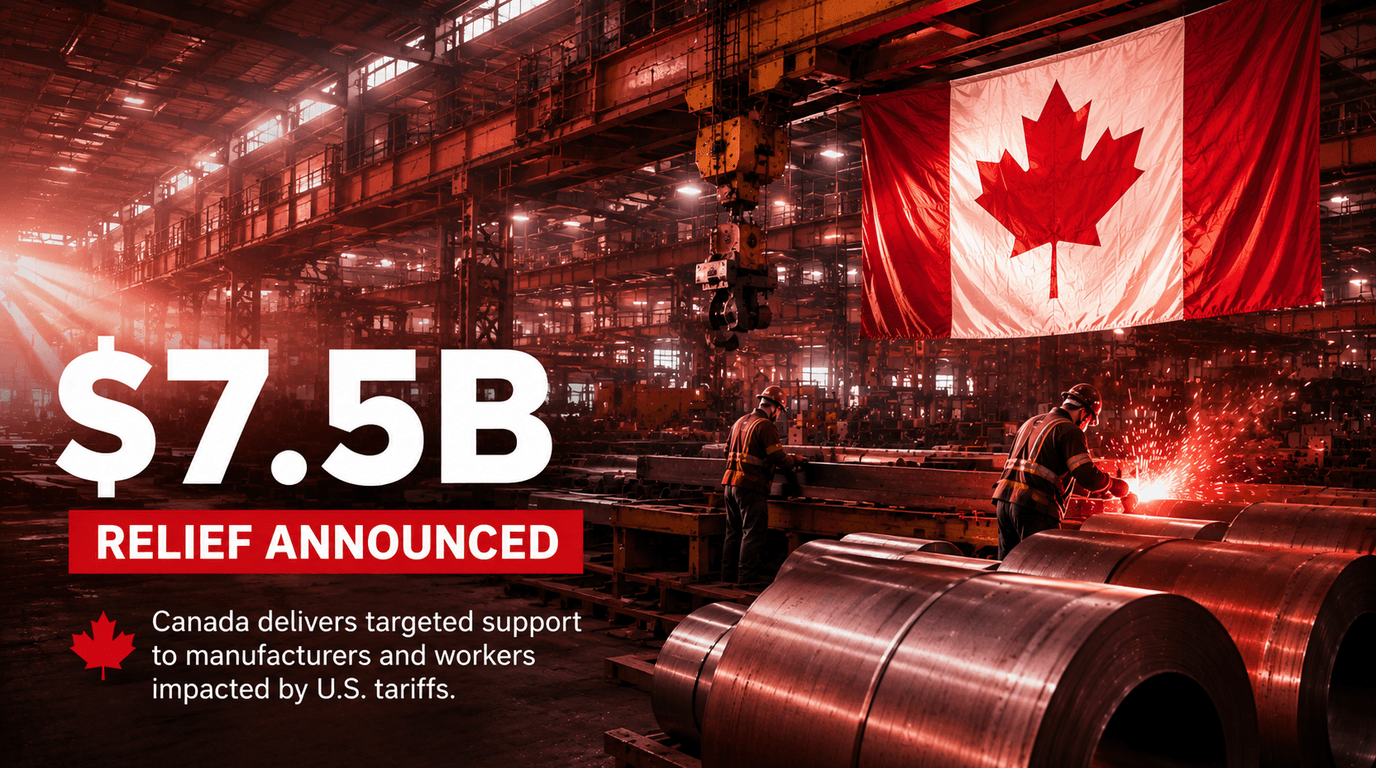
This one doesn’t make headlines, but it matters. FedDev Ontario, PrairiesCan, PacifiCan, ACOA, CED, FedNor, and CanNor all received budget increases in the 5–12% range. More importantly, each agency was given broader discretion to fund projects that respond to trade disruption, particularly tariff impacts on export-dependent manufacturers.
What that means in practice: if you’re a mid-market manufacturer affected by U.S. tariff actions, your regional agency now has a specific mandate and budget line to help. These aren’t just R&D programs. They cover capital equipment, market diversification, and workforce training.
What this means for your 2026 funding strategy
Here’s the practical takeaway. If you’re running a growth-stage company in Canada right now, the 2026 budget created three strategic openings:
- Revisit your SR&ED claim structure. The expanded expenditure limit and taxable capital threshold mean you may qualify for significantly more cash back than last year, even on the same R&D spend.
- Time your next capital project for SRF. The program is open and actively reviewing applications. Early movers with well-structured proposals have an advantage because intakes are competitive and time-limited.
- Don’t ignore the RDAs. Regional agencies are under-utilized by growth companies. They’re faster to fund than federal programs, the dollar amounts are meaningful ($500K–$5M is common), and they now have explicit trade-disruption mandates.
We work with companies across all of these programs. If you’re not sure where your project fits, or you want to know what you’re leaving on the table, that’s what we do.